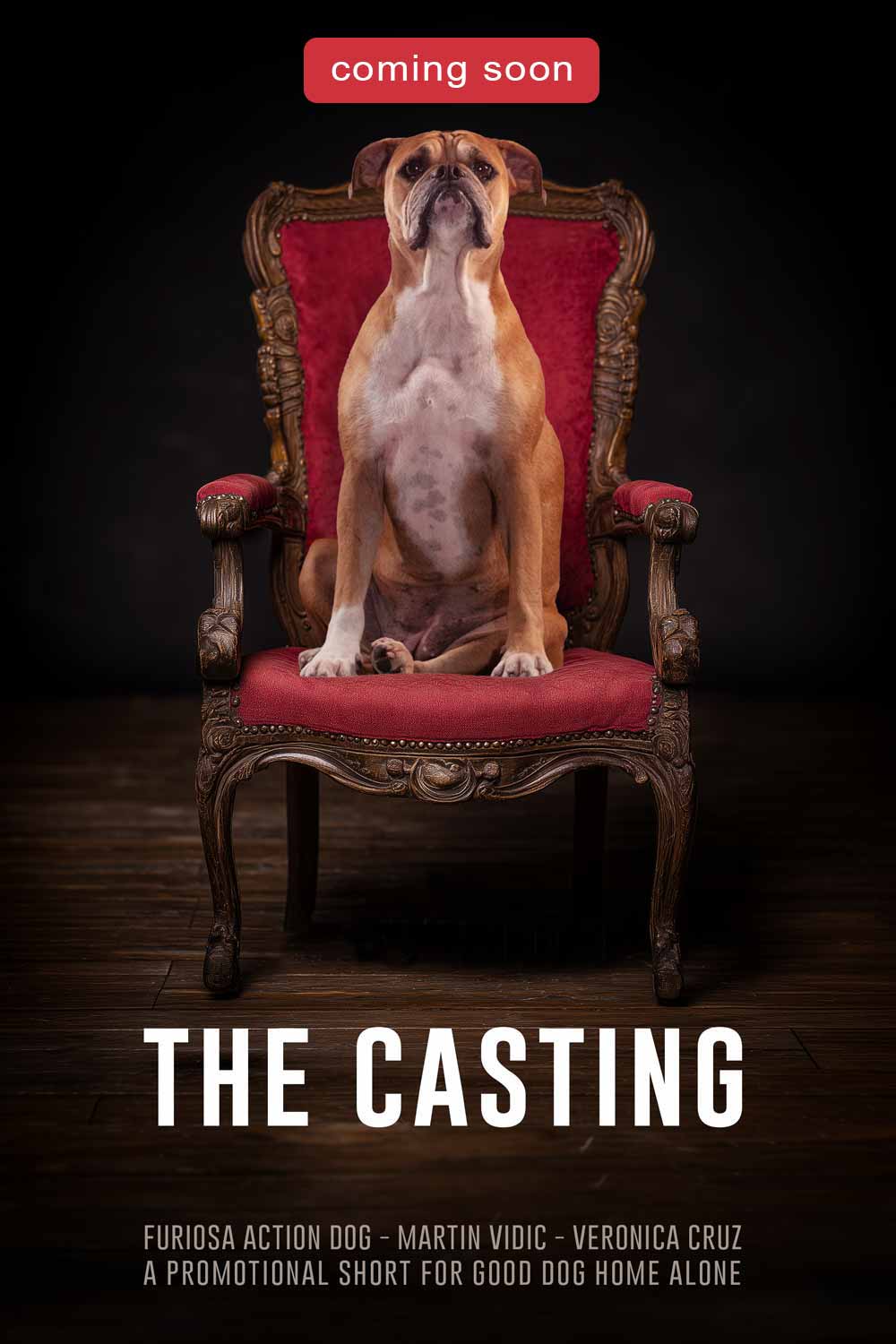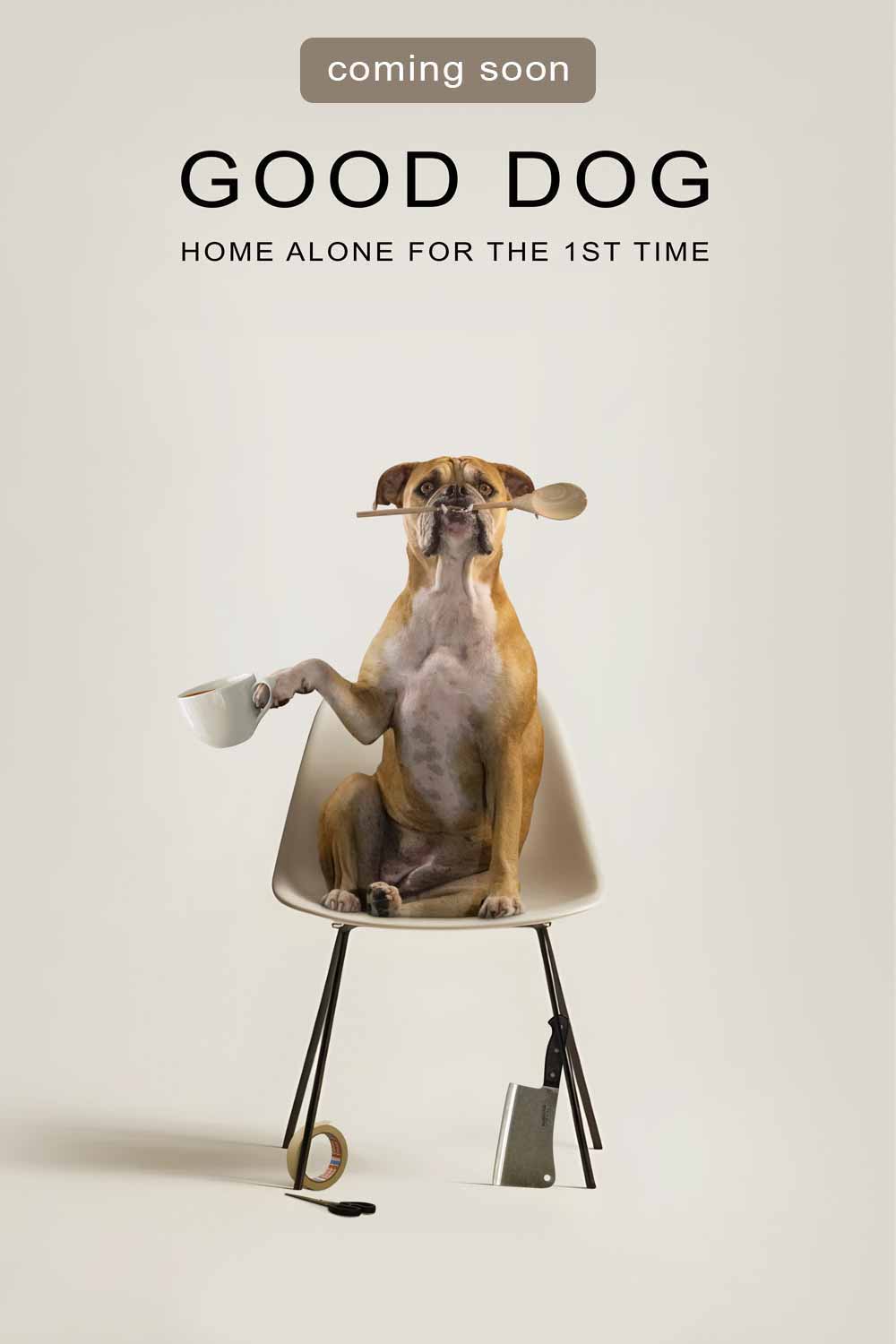
I think we can all agree that our dogs are already little stars. Turning them into “movie stars” is easier than you think. Follow these 5 steps and your furry friend might just become the next Leonardo Dog-Caprio.
Being able to focus and hold eye contact is probably the most important skill for young canine actors.
Some dogs just have it — a natural talent. They look up at you, waiting for your wisdom, a secret message only they can understand, the next exciting game… or maybe even a treat.
And then there are those whose eyes keep spinning in circles. Not because they lack intelligence, but because life’s little excitements are just too overwhelming for them. For a moment it’s you, but then — a fly… no, a shadow… a strange sound…
No matter where your dog falls on that spectrum, focus and presence can be trained. And the best way to get started is through quality bonding time:
First, remove all distractions, including other animals and humans. Then play with your little friend and reward them with treats. Create little moments of eye contact and quiet in between.
Once they start settling into that rhythm, move on to tricks.
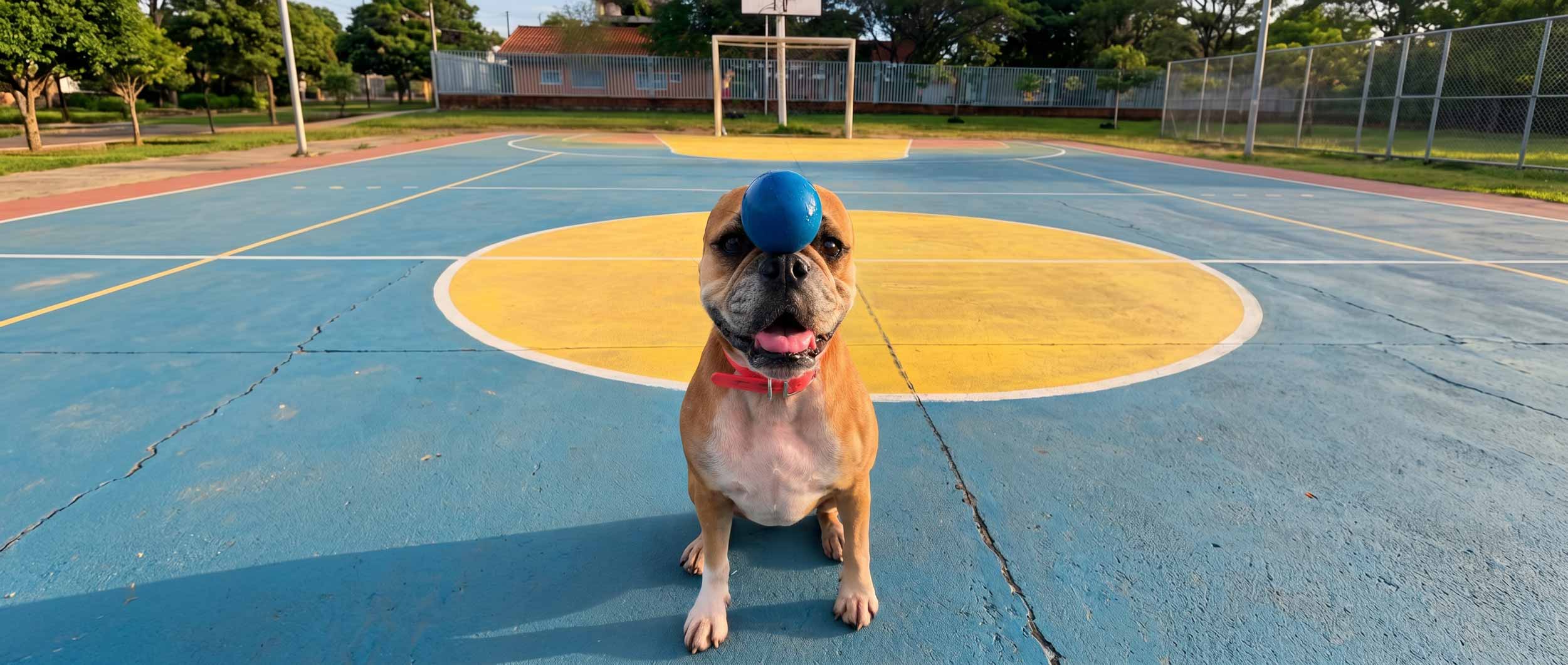
The first trick any dog should learn is sit, but later you can move up to ball exercises like the ones I show in the video under section 3.
The first trick any dog should learn is sit. Everything else is built on top of that. You teach your dog to sit, and suddenly you’ve created a secret language between the two of you.
The best way to teach sit it to hide a treat behind your fingers and move it over your dogs head until he takes a step back.
We used Zack George's Sit Tutorial from youtube when Furiosa was 4 months old and it only took use 15 minutes to teach her.
If you want to film with your dog, your dog has to be able to stay still for a moment so the shot can be framed, focused, and the lighting adjusted.
The way we taught Furiosa to wait was by sitting outside the supermarket. While one of us went in to buy groceries, the other stayed with her and, with a palm extended like a traffic cop, said “WAIT” while slowly stepping backward.
At first, she would immediately jump up the moment we moved away. But if she managed to resist for even a few seconds, we would come back and reward her with a treat.
Soon we could walk away several steps… though we still had to keep repeating “wait, wait, wait” the whole time like a broken record.
Now we can walk away completely and she’ll stay there as long as we want. That said, we usually just hide somewhere nearby and watch her from another door, because we don’t want our precious getting stolen.
One she can wait, you can move on to the ball exercises from the video below.
The idea is to get her full full focuse. Even if her fvorite ball is on her nose or bouncing against her chest, she will not lose her focus anymore.
The more tricks your dog can do, the better. Paw is easy, so it’s usually a great place to continue.
Work yourself up to high five, double high five, spin, sit, lie down, bark, jump, roll over — every trick becomes an opportunity for deeper bonding and another tool in her cinematic toolbox.
Now this is where the beginners are separated from the pros.
Dogs are highly emotional creatures, and they can feel all the same emotions we humans do. Dog will not only read their dogs’ tails and body language, but also their facial expressions. Yes, dogs have happy faces, smiles, sad looks, pensive expressions, and many more.
But you can’t teach teach them facial expressions with a treat.
The only way is method acting.
You see, dogs spend a huge amount of time watching us and looking for emotional cues. If you get stressed when another dog passes by, your dog will most likely react negatively. If you suddenly start dancing around excitedly, your dog will probably join in.
So the trick is to actually create the emotion in the dag and in the environment.
If you want to see that big dog smile, spend a few minutes playing ball first. If the dog needs to look bored, create a calm, boring moment. Learn what triggers different emotions in your dog, and then use those triggers naturally in front of the camera.
The truth is, dogs don’t care about cameras, lights, or your cinematic ambitions. All they really want is to be around you. And if you’re already into filmmaking, using your dog as an actor is really just another way to spend time with them.
Their lives are way too short anyway. Between filming Furiosa’s first shots and finishing the final edit, the first few gray hairs had already started appearing on her coat. And in the end, it doesn’t really matter how big the screen is that she’s on. It’s all just playtime, and remember, it should always be.
And if you happen to create a film with your dog along the way, it becomes more than just a memory for you — it becomes one you can share with the world.