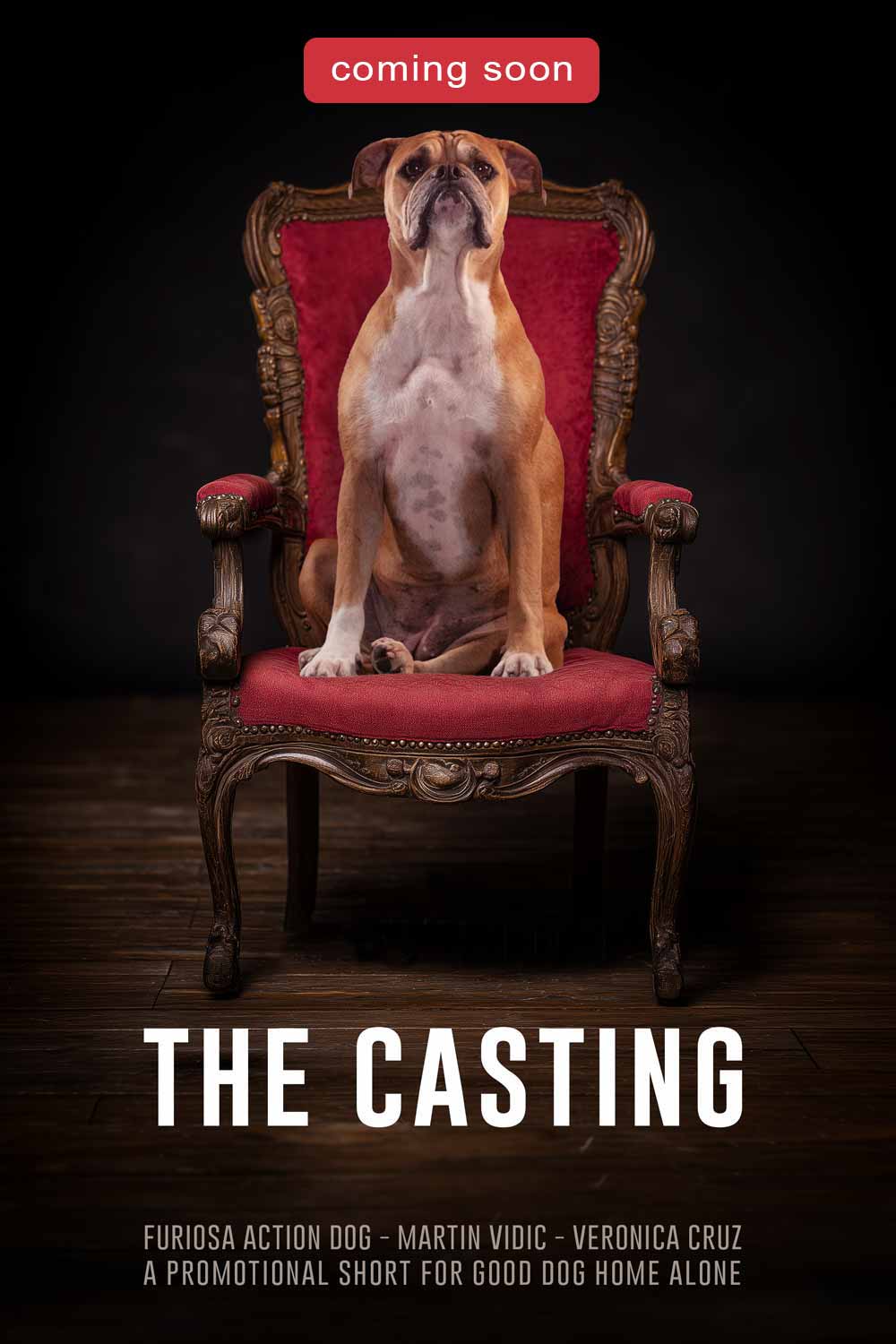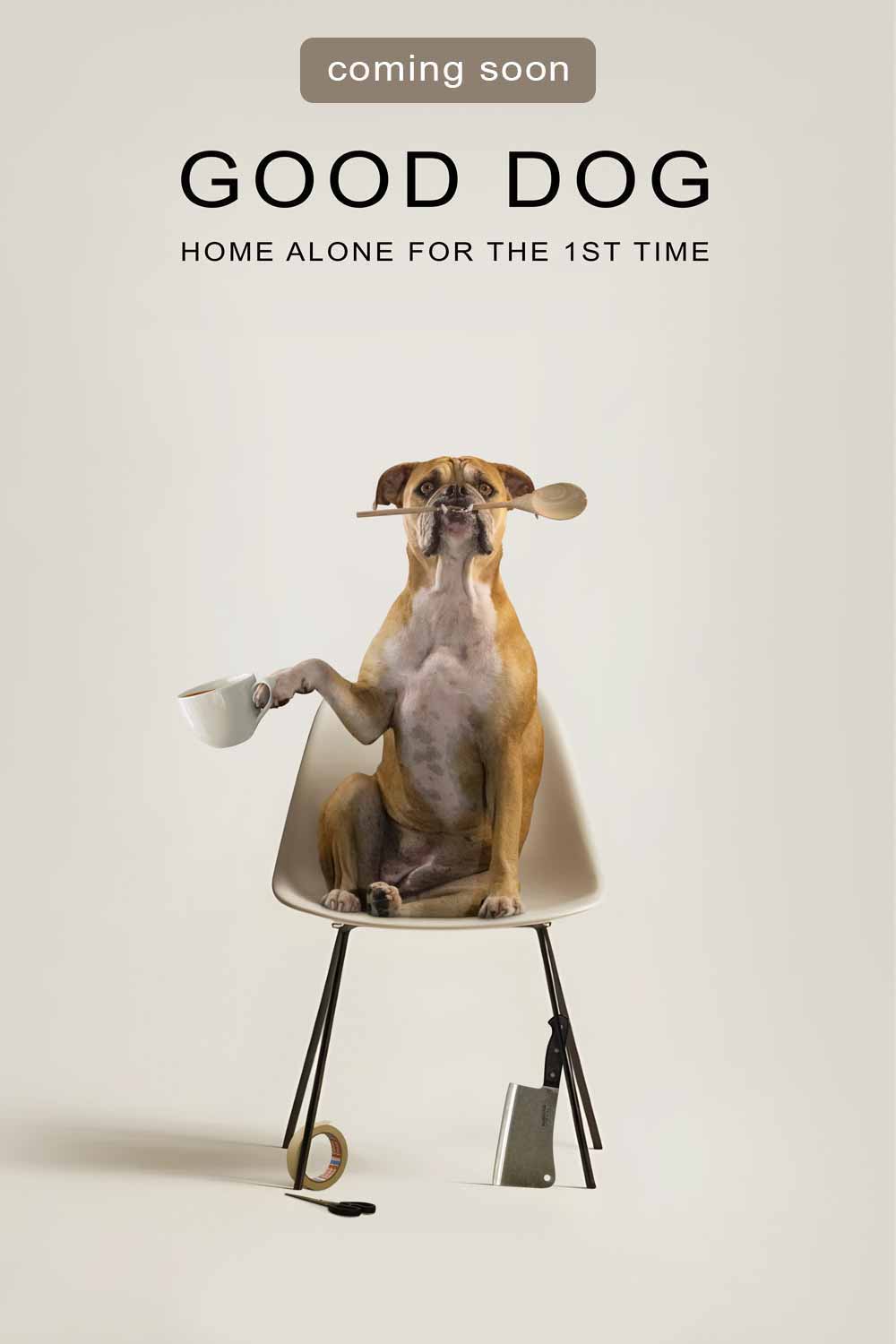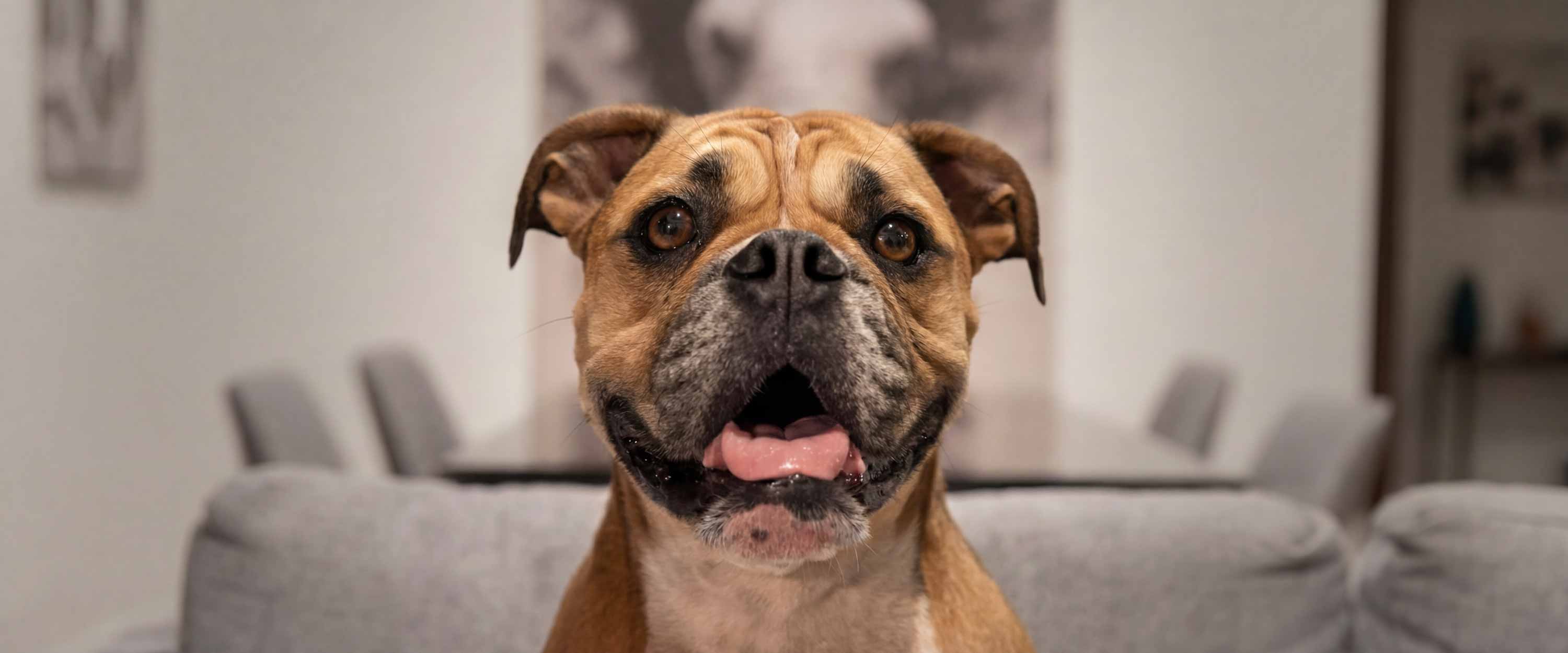

Our lives tend to orbit around two things: movies—and Furiosa, our boxer dog.
So when we decided to step into the world of short films and independent filmmaking, it felt obvious.
We had to make a dog film.
There were plenty of dog movies out there ready to be copied. But if you look closely, they all fall into two categories. Either the dog talks with a human voice, or the humans do all the acting while the dog is simply there as an object of empathy—something you just want to cuddle and adopt.
We wanted something different. Our dog had to be a proactive character—with no human voice, no animation, and no AI. We wanted internal contradiction—conflicting values that make you wonder what she’ll do next.
And the reason we believed we could pull this off…
was because of what happened a few months earlier.
A few times a week, we would take an hour to do acting exercises. At the time, we were doing a lot of Meisner technique work. One person would be absorbed in an activity that created a specific emotion, and then the partner would enter with a different emotional state. The two emotions would collide.
Furiosa would usually sit on the couch, watching our every move.
When something negative happened, her ears would go back. When the energy lifted, her tail would start to wag.
She wasn’t just watching—she was reacting.
Sometimes we would get into an imaginary fight, and it would genuinely stress her out. We’d cuddle her afterward and apologize. We never meant to upset her.
Dogs are emotional copy machines. They look to their owners for guidance constantly, trying to figure out what we want—and how we feel.
You’ve probably seen it yourself.
You’re out for a walk. Another dog appears. Your dog pauses…turns back… and looks straight at you.
Just for a split second.
They’re reading your face.
Maybe you’re thinking, oh no, not that Yorkshire terrier again.
That’s enough.
Your dog starts barking. Pulling. The leash tightens. The situation escalates.
And after a while, they stop checking in with you altogether. They just react.
At that point, it’s hard to fix.
Because the pattern is already set.
But the key is this: you can’t hide your emotions.
Your dog will see them—and mirror them.
So we started teaching her more.
But not just the usual commands like sit or spin.
We taught her to hold eye contact. Then look at somebody else, hold eye contact again, etc.
We trained her to bark on command, to growl and bark in different ways, and to hold still until we said “action.”
This gave us control. It meant we could adjust focus and lighting before a shot, and trust that she wouldn't move.
And honestly—it was fun.
Sometimes we’d sit at a restaurant, she’d sit on a chair next to us, and we’d tell her to stare someone down… and just hold it—until they started to get nervous.
She loved the attention, the additional play-time, and of course, the treats.
There was one particular shot early on where she had to look bored, then sigh, turn her head, and rest her chin on the sofa—looking at a picture with a sense of nostalgia.
At first, we tried it mechanically.
Look here. Look there. Chin down.
But it didn’t look right.
She looked excited, not bored.
She had to actually be bored to look bored.
So we laid a treat in front of her near the TV and said, “Look at it. Wait.” And she waited.
Sooner or later, she was going to get bored, turn back to us, and I'd quietly say, “Chin down,” right?
Wrong.
We had trained her too well.
She kept staring at that damn treat for almost 15 minutes, waiting for our command to "Take it."
So we gave her the treat, took a break, and then tried again.
This time, we had to become bored too. The whole room had to be boring.
We did the same setup again.
Treat in front of her. Room quiet. No music. No sound.
We walked back to the camera and sat down slowly.
She kept staring at the treat.
We slowed our breathing. Didn’t talk at all.
After a minute, she looked back at us… then back at the treat.
We laid our heads on the table, as if we were about to fall asleep.
She looked at us again… then back at the treat.
I yawned. I was actually getting tired.
And then—she turned, sighed, and put her chin down, looking straight into the camera.
Perfect.
We jumped up and gave her twenty treats and played some ball..
Whether you’re working with dogs or humans, everyone on set must support the emotional tone of the scene.
In this case, it was just us—but if there had been a production designer, a gaffer, and a makeup artist, they would have needed to act bored too.
The same applies to human actors. Remember what happened with Christian Bale during the Terminator Salvation incident—he was fully committed to the moment, while the green screen actor in the cardboard suit in front of him was joking around, breaking the illusion.
When one person disconnects from the tone, it affects the actors.
That’s why every aspiring filmmaker should start by making a short film with their dog. It teaches this lesson faster than anything else.