
Young Chinese wushu athletes usually only practice modern wushu and train for wushu competitions. Of course, there are also Taiji competitions in China, but depending on the competition, the forms performed there can be very different from what Westerners might imagine. The 24-form and the 42-form are well known, but there are also freestyle forms. The 24-form was created for competition use by the IWUF (International Wushu Federation) in 1956, and in 1990 the 42-form was created (also for competition use). The 42-form is a mixture of the main Taiji styles. That’s why many traditional Taiji instructors don’t like it when their students want to learn the 42-form (si shi er shi Tai Ji Quan).
Freestyle forms are between 5 and 6 minutes long and include difficulties. You have to create your own freestyle form, and if it is not impressive enough—meaning if there are no extreme stretches, acrobatics, etc.—you will have no chance to win. Some of the movements resemble rhythmic gymnastics and cannot be performed without years of intensive stretching. Just like modern wushu, modern Taiji can be very hard on the joints.
There are also competitions for traditional Taiji forms and Taiji tuishou (push hands), but those competitions are not very popular in China and the events are more like gatherings. One reason for this is that modern Taiji competitions are usually held together with modern wushu competitions.
Forms: Modern Taiji & Competitions
24 Form (IWUF 1956)
42 Form (IWUF 1990)
Freestyle Taiji (your self-made Taiji competition form with difficulties, etc.)
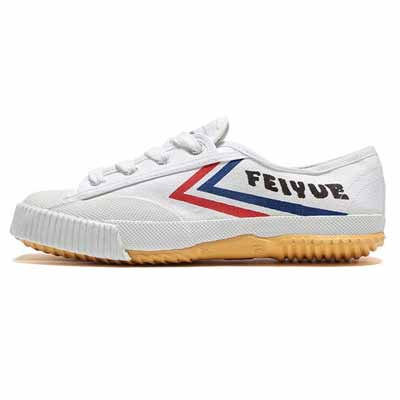
The only shoe you’ll ever need. Ideal for wushu and acrobatics on hard ground. Perfect for overall foot health.
#barefootshoe
#wideshoebox
